Course Outline
Why Architecting the Enterprise?
- Introduction: Current issues in Enterprise and IT governance
- Legacy Systems and evolution needs
- Business Architecture and Enterprise Architecture: similarities and differences
The fundamentals
- Architecting the Enterprise: the principles
- Strategic Alignment
- Business and IT Repository
- Logical n-tier Architectures
- Application technologies: ERP, SCM, web portals
- Integration architectures and Services Architectures: EAI and ESB
- Service Oriented Architectures: Roles of BPM and BAM
Enterprise Architecture Strategies and Methodologies
- "As is" and "To be" system cartographies: How to determine the roadmap?
- Structures to better align IT with Strategies?
- What is the approach?
- What are the links with the development processes?
Enterprise Architecture Content Framework
- Identifying the business functions of the enterprise
- Cartography of the actors and business functions
- Aligning business strategies
- Patterns for architecting the IT system
- Zones, squares, and blocks
- Identifying Exchanges using services and events
- Modeling inter-block exchanges and data objects to support business process realizations
Building the repository and data architectures
- Master Data Management (MDM)
- Granularity Management
- Modeling Languages
- Definition of the meta-model and architecture rules
- Elaboration of the Enterprise Architecture Repository
Architecture Cartography Reference Layers
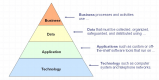
- Business, Functional, Application, and Technical Layers
- Links between the Strategic and Business Views
- Traceability between the Business and Functional Views
- Traceability between the Functional and Application Views
- Bridges with the Technical View
Contribution of an 'Enterprise Architecture' to create value
- Contribution to business value
- Best Practices
- The Enterprise Architecture Roadmap
- Perspectives
Tools
- Business Process and Cartography Management tools
- Presentation on a case study
Notice: The above training-mentoring sessions are conducted interactively using Business Modeling tools to ensure a high level of traceability between business specifications and their execution. Concepts are first explained using basic examples and are then followed by solution drafts for your own problems. After this session, we can accompany you by reviewing and validating your solutions based on your needs.
The BMM, BPMN, and UML logos referenced on this site are trademarks of the Object Management Group (OMG).
RUP and SOMA are trademarks of IBM / Rational Software.
Custom Corporate Training
Training solutions designed exclusively for businesses.
- Customized Content: We adapt the syllabus and practical exercises to the real goals and needs of your project.
- Flexible Schedule: Dates and times adapted to your team's agenda.
- Format: Online (live), In-company (at your offices), or Hybrid.
Price per private group, online live training, starting from 2600 € + VAT*
Contact us for an exact quote and to hear our latest promotions
Testimonials (1)
The flexibility to look at real examples - outside of the courseware content.