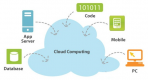
Remote or local, instructor-led live Cloud Computing training courses demonstrate through hands-on practice the fundamentals of cloud computing and how to benefit from cloud computing.
Cloud Computing training is available as "remote live training" or "onsite live training". Remote live training is carried out by way of an interactive, remote desktop. Onsite live Cloud Computing training can be carried out locally on customer premises in Portugal or in NobleProg corporate training centers in Portugal.
NobleProg -- Your Local Training Provider
Testimonials
That the trainer was able to adapt to specific questions/situations
Inforit BV
Course: Kubernetes on Azure (AKS)
That she asked for feedback everyday to improve on the next day's lectures
Bacher Systems EDV GmbH
Course: Terraform Fundamentals for Beginners
That it was all new technology and offerings to myself. After being shown how quick and easy it is to set up certain services in AWS, I feel I could get a real benefit out of it for quick project and proposal prototyping.
MDA Systems Ltd.
Course: AWS Developer Associate
Fernando knew the products and how to use them. His willingness and friendliness to assist in the hands-on lab was great.
MDA Systems Ltd.
Course: AWS Developer Associate
There was a good general pass over what seemed like the most important parts of AWS. The instructor was open to questions and addressed areas of AWS that were not part of the outline based on our questions.
MDA Systems Ltd.
Course: AWS Developer Associate
I liked getting to understand the breadth of the services offered by AWS and gaining a better understanding of their pricing model for each of those services.
William Crowdis - MDA Systems Ltd.
Course: AWS Developer Associate
Thought it was a good overview of a lot of different services. Liked the detail on IAS.
MDA Systems Ltd.
Course: AWS Developer Associate
Explaining why it's financially viable to do these things
MDA Systems Ltd.
Course: AWS Developer Associate
It provided context for the things we do in AWS.
MDA Systems Ltd.
Course: AWS Developer Associate
Everything. I had played around with AWS before but just on my own personal time. The training really brought everything together, with real world examples and how many individual pieces can be bolted together for a applicable solution.
Matt Sartain - MDA Systems Ltd.
Course: AWS Developer Associate
Hands-on labs
MDA Systems Ltd.
Course: AWS Developer Associate
He knew what he was talking about
KnowledgePool
Course: Terraform for Managing Cloud Infrastructure
Reda took onboard suggestions for changes to approaches and as a result being able to walk through the examples with explanations as to what was happening/expected/required etc was very beneficial and helped my understanding, thank you Reda.
KnowledgePool
Course: Terraform for Managing Cloud Infrastructure
The exercises which we did during Friday morning, they were presented at a time when concentration was peak, with plenty of scope for guidance when required.
Roni Colling - KnowledgePool
Course: Terraform for Managing Cloud Infrastructure
very knowledgeable
Tony Edogiawerie - KnowledgePool
Course: Terraform for Managing Cloud Infrastructure
The trainer was knowledgeable in many related technical areas and displayed a real passion for the subject being taught
KnowledgePool
Course: Terraform for Managing Cloud Infrastructure
It was fast paced, but that keeps us on our toes, I requested the material to be sent to me, and it has been, so I am now able to review this at a more measured pace, to fully digest the content
Rupert Hirst - KnowledgePool
Course: Terraform for Managing Cloud Infrastructure
Mix of lectures and practical exercises
KnowledgePool
Course: Terraform for Managing Cloud Infrastructure
Training is good but require more time to practice test
Manu Megaravalli - HSBC Service Delivery (Polska) Sp. z o o.
Course: AWS Architect Certification
Vast knowledge of the Lecturer + Mega great experience:)
Mariusz Brodowski - Orange Szkolenia Sp. z o.o.
Course: OpenStack Administration - Basic + Intermediate
Machine Translated
All
Orange Szkolenia Sp. z o.o.
Course: OpenStack Administration - Basic + Intermediate
Machine Translated
Knowledge and experience of the trainer (sic!) Materials The way of conducting the zajec-optimal pace, understandable message, luzna atmosphere connected with a very high level meritorika, practical examples, exercise in training (hands-on)
Miroslaw Matyla - Orange Szkolenia Sp. z o.o.
Course: OpenStack Administration - Basic + Intermediate
Machine Translated
Exercises
Orange Szkolenia Sp. z o.o.
Course: OpenStack Administration - Basic + Intermediate
Machine Translated
The trainer's knowledge was impressive.
Piotr Masłowski - ING Bank Śląski S.A.
Course: Hyperledger Fabric for Beginners
Machine Translated
Analysis of the code and shortcomings in Fabric.
ING Bank Śląski S.A.
Course: Hyperledger Fabric for Beginners
Machine Translated
Very good knowledge of the subject
Florian Lavoillotte - Orange
Course: Terraform for Managing Cloud Infrastructure
Machine Translated
Hands-on exercises
王 朝晖 - 是德科技
Course: OpenStack Administration - Basic + Intermediate
Machine Translated
Calmness and self-mastery of the lecturer and huge knowledge, transmitted in a simple and simple way, supported by practical examples. One of the better trainings I've participated in.
Tomasz Czajka - Unit4 Polska sp. z o.o.
Course: Introduction to Azure
Machine Translated
El conocimiento del instructor es increíble así cómo la claridad en las explicaciones.
CARGLASS, S.L.
Course: AWS Architect Certification
Olbrzymia wiedza trenera, zaangażowanie, super flow!
Fujitsu Technology Solutions Sp. z o.o.
Course: Hyperledger Fabric for Beginners
Wiedza trenera, potrafił odpowiedzieć na każde pytanie.
Fujitsu Technology Solutions Sp. z o.o.
Course: Hyperledger Fabric for Beginners
Cloud Computing Course Outlines in Portugal
By the end of this training, participants will be able to:
- Collaboratively develop functions, applications and services using AWS Cloud9 IDE.
- Integrate AWS Lambda functions with other AWS services.
- Create and manage APIs.
- Set up an AWS Lambda function to read and process real-time streaming data.
- Create and manage a continuous integration pipeline for building, testing and deploying a AWS Lambda functions and applications.
In this instructor-led, live training, participants will learn how to set up and manage a production-scale container environment using Kubernetes on AKS.
By the end of this training, participants will be able to:
- Configure and manage Kubernetes on AKS
- Deploy, manage and scale a Kubernetes cluster
- Deploy containerized (Docker) applications on Azure
- Migrate an existing Kubernetes environment from on-premise to AKS cloud
- Integrate Kubernetes with third-party continuous integration (CI) software
- Ensure high availability and disaster recovery in Kubernetes
Audience
- Developers
- System Administrators
- DevOps Engineers
Format of the Course
- Part lecture, part discussion, exercises and heavy hands-on practice in a live-lab environment.
Note
- To request a customized training for this course, please contact us to arrange.
By the end of this training, participants will be able to:
- Build an application and containerize it from scratch.
- Improve the deployment of cloud infrastructures.
- Create a containerized OpenStack solution.
- Perform lifecycle management for cloud infrastructures.
The course cover all topics from Certificate OpenStack Administrator exam and prepares participant to the exam both theoretically and practically. Moreover programme of the course has been extended about topic that will allow the participant to better understand all OpenStack caveats required to pass the exam. At the end of the course every participant will have a chance to test themself during the mock COA exam.
In this instructor-led, live training, participants will learn the fundamentals of Nextcloud as they step through setting up their own Nextcloud server.
By the end of this training, participants will be able to:
- Install and configure Nextcloud
- Perform Nextcloud administration and optimization tasks
- Integrate third-party solutions with Nextcloud to fit their organization's needs
Audience
- System Administrators
- Developers
Format of the course
- Part lecture, part discussion, exercises and heavy hands-on practice
Note
- To request a customized training for this course, please contact us to arrange.
Morpheus is a Cloud Application Management Platform for managing applications across multiple clouds as well as orchestrating cloud resources themselves.
In this instructor-led, live training, participants will learn set up, configure and manage Morpheus.
By the end of this training, participants will be able to:
- Install and configure Morpheus
- Provision cloud resources across different infrastructures
- Orchestrate and manage clouds, including logging, monitoring and backups
- Migrate applications from on-premise to private or public clouds
- Integrate Morpheus with third-party tools such as Ansible, Chef, Consul, and others
Audience
- Administrators
- Developers
- DevOps Engineers
Format of the course
- Part lecture, part discussion, exercises and heavy hands-on practice
Note
- To request a customized training for this course, please contact us to arrange.
By the end of this training, participants will be able to:
- Build reproducible workflows and machine learning models.
- Manage the machine learning lifecycle.
- Track and report model version history, assets, and more.
- Deploy production ready machine learning models anywhere.
By the end of this training, participants will be able to:
- Provide an alternative to Unix Commands with the MinIO Client.
- Use MinIO to build high performance infrastructures for machine learning, analytics, and more.
- Deploy MinIO on Kubernetes for orchestrated deployment to scale.
In this instructor-led, live training, participants will learn how to set up and manage a production-scale container environment using Kubernetes on EKS.
By the end of this training, participants will be able to:
- Configure and manage Kubernetes on EKS
- Migrate an existing Kubernetes environment from on-premise to AWS cloud
- Integrate Kubernetes with third-party continuous integration (CI) software
- Ensure high availability and disaster recovery in Kubernetes
- Understand and adopt the tools available to efficiently manage EKS
Audience
- Developers
- System Administrators
- DevOps Engineers
Format of the Course
- Part lecture, part discussion, exercises and heavy hands-on practice in a live-lab environment.
Note
- To request a customized training for this course, please contact us to arrange.
By the end of this training, participants will be able to:
- Understand and use parallel programming with Fortran in OpenMP.
- Calculate fractals in parallel to render multiple pixels and characters.
- Implement vector programming with SIMD extensions for HPC systems.
- Add parallel blocks for specifying shared memory parallelism.
By the end of this training, participants will be able to:
- Install and configure Kubeless.
- Turn Kubernetes into a function execution machine, without the need for add-ons such as a messaging bus.
- Comfortably manage functions as standard Kubernetes objects.
- Troubleshoot deployments using existing logging and monitoring setup and skills.
By the end of this training, participants will be able to:
- Install and configure Kubernetes, Kubeflow and other needed software on Azure.
- Use Azure Kubernetes Service (AKS) to simplify the work of initializing a Kubernetes cluster on Azure.
- Create and deploy a Kubernetes pipeline for automating and managing ML models in production.
- Train and deploy TensorFlow ML models across multiple GPUs and machines running in parallel.
- Leverage other AWS managed services to extend an ML application.
By the end of this training, participants will be able to:
- Install and configure Kubernetes, Kubeflow and other needed software on AWS.
- Use EKS (Elastic Kubernetes Service) to simplify the work of initializing a Kubernetes cluster on AWS.
- Create and deploy a Kubernetes pipeline for automating and managing ML models in production.
- Train and deploy TensorFlow ML models across multiple GPUs and machines running in parallel.
- Leverage other AWS managed services to extend an ML application.
By the end of this training, participants will be able to:
- Install and configure Knative on-premise.
- Deploy and run serverless functions and applications that autoscale.
- Integrate Knative with continuous integration systems to enable an end-to-end development workflow.
- Simplify the overhead of deploying containers; focus on writing great code.
- Basics of IoT architecture and functions
- “Things”, “Sensors”, Internet and the mapping between business functions of IoT
- Essential of all IoT software components- hardware, firmware, middleware, cloud and mobile app
- IoT functions- Fleet manager, Data visualization, SaaS based FM and DV, alert/alarm, sensor onboarding, “thing” onboarding, geo-fencing
- Basics of IoT device communication with cloud with MQTT.
- Connecting IoT devices to AWS with MQTT (AWS IoT Core).
- Connecting AWS IoT core with AWS Lambda function for computation and data storage using DynamoDB.
- Connecting Raspberry PI with AWS IoT core and simple data communication.
- Hands on with Raspberry PI and AWS IoT Core to build a smart device.
- Sensor data visualization and communication with web interface.
Summary
-
An advanced training program covering the current state of the art in Internet of Things
-
Cuts across multiple technology domains to develop awareness of an IoT system and its components and how it can help businesses and organizations.
-
Live demo of model IoT applications to showcase practical IoT deployments across different industry domains, such as Industrial IoT, Smart Cities, Retail, Travel & Transportation and use cases around connected devices & things
Target Audience
-
Managers responsible for business and operational processes within their respective organizations and want to know how to harness IoT to make their systems and processes more efficient.
-
Entrepreneurs and Investors who are looking to build new ventures and want to develop a better understanding of the IoT technology landscape to see how they can leverage it in an effective manner.
Estimates for Internet of Things or IoT market value are massive, since by definition the IoT is an integrated and diffused layer of devices, sensors, and computing power that overlays entire consumer, business-to-business, and government industries. The IoT will account for an increasingly huge number of connections: 1.9 billion devices today, and 9 billion by 2018. That year, it will be roughly equal to the number of smartphones, smart TVs, tablets, wearable computers, and PCs combined.
In the consumer space, many products and services have already crossed over into the IoT, including kitchen and home appliances, parking, RFID, lighting and heating products, and a number of applications in Industrial Internet.
However, the underlying technologies of IoT are nothing new as M2M communication existed since the birth of Internet. However what changed in last couple of years is the emergence of number of inexpensive wireless technologies added by overwhelming adaptation of smart phones and Tablet in every home. Explosive growth of mobile devices led to present demand of IoT.
Due to unbounded opportunities in IoT business, a large number of small and medium sized entrepreneurs jumped on a bandwagon of IoT gold rush. Also due to emergence of open source electronics and IoT platform, cost of development of IoT system and further managing its sizable production is increasingly affordable. Existing electronic product owners are experiencing pressure to integrate their device with Internet or Mobile app.
This training is intended for a technology and business review of an emerging industry so that IoT enthusiasts/entrepreneurs can grasp the basics of IoT technology and business.
Course Objective
Main objective of the course is to introduce emerging technological options, platforms and case studies of IoT implementation in home & city automation (smart homes and cities), Industrial Internet, healthcare, Govt., Mobile Cellular and other areas.
-
Basic introduction of all the elements of IoT-Mechanical, Electronics/sensor platform, Wireless and wireline protocols, Mobile to Electronics integration, Mobile to enterprise integration, Data-analytics and Total control plane
-
M2M Wireless protocols for IoT- WiFi, Zigbee/Zwave, Bluetooth, ANT+ : When and where to use which one?
-
Mobile/Desktop/Web app- for registration, data acquisition and control –Available M2M data acquisition platform for IoT-–Xively, Omega and NovoTech, etc.
-
Security issues and security solutions for IoT
-
Open source/commercial electronics platform for IoT-Raspberry Pi, Arduino , ArmMbedLPC etc
-
Open source /commercial enterprise cloud platform for AWS-IoT apps, Azure -IOT, Watson-IOT cloud in addition to other minor IoT clouds
-
Studies of business and technology of some of the common IoT devices like Home automation, Smoke alarm, vehicles, military, home health etc.
In this instructor-led, live training, participants will learn how to develop IoT applications using Azure.
By the end of this training, participants will be able to:
- Understand the fundamentals of IoT architecture
- Install and configure Azure IoT Suite
- Learn the benefits of using Azure in programming IoT systems
- Implement various Azure IoT services (IoT Hub, Functions, Stream Analytics, Power BI, Cosmos DB, DocumentDB, IoT Device Management)
- Build, test, deploy, and troubleshoot an IoT system using Azure
Audience
- Developers
- Engineers
Format of the course
- Part lecture, part discussion, exercises and heavy hands-on practice
Note
- To request a customized training for this course, please contact us to arrange.
By the end of this training, participants will be able to:
- Install and configure OpenFaas.
- Package any binary or code as a serverless function without repetitive boiler-plate coding.
- Decouple from AWS Lambda to avoid lock-in.
- Deploy event-driven functions to an on-premise server or to the cloud.
By the end of this training, participants will be able to:
- Plan, deploy, and administer OpenStack as a private cloud.
- Understand IaaS architecture and its implementation under OpenStack.
- Replace physical routers and servers with virtual machines running in a private cloud.
- Reduce infrastructure and maintenance costs through virtualization and cloud computing.
- Expedite the rollout of new services to customers.
In this instructor-led, live training, participants will learn the fundamentals of Amazon Redshift.
By the end of this training, participants will be able to:
- Install and configure Amazon Redshift
- Load, configure, deploy, query, and visualize data with Amazon Redshift
Audience
- Developers
- IT Professionals
Format of the course
- Part lecture, part discussion, exercises and heavy hands-on practice
Note
- To request a customized training for this course, please contact us to arrange.
In this instructor-led, live training, participants will learn how to set up and manage Pivotal Cloud Foundry.
By the end of this training, participants will be able to:
- Understand how Pivotal Cloud Foundry's relation to other cloud offerings (SaaS, PaaS to IaaS)
- Install, configure and maintain an instance of Pivotal Cloud Foundry
- Deploy a sample cloud application
- Set up and manage users on Pivotal Cloud Foundry
- Back up, restore and upgrade Pivotal Cloud Foundry
Audience
- Administrators
Format of the course
- Part lecture, part discussion, exercises and heavy hands-on practice
By the end of this training, participants will be able to:
- Install and configure Terraform.
- Understand the principles of infrastructure as code.
- Set up and automate infrastructure using Terraform.
- Write and share configuration file with team members.
By the end of this training, participants will be able to:
- Install and configure Terraform.
- Implement an "infrastructure as code" approach to managing private and public cloud environments.
- Write declarative configuration files for more efficient change management and collaboration.
- Improve transparency in the infrastructure procurement process.
- Create, launch, and remove resources across different infrastructure providers (AWS, GCP, Azure, OpenStack, VMware, etc.) from within a single tool.
By the end of this training, participants will be able to:
- Set up Serverless Framework to work with compute services such as AWS Lambda.
- Reduce the complexity and cost of deploying microservices on different cloud platforms.
- Emit and capture events and execute functions automatically.
By the end of this training, participants will be able to:
- Install and configure Red Hat Ceph Storage.
- Deploy and manage a Red Hat Ceph Storage cluster.
- Tune Red Hat Ceph Storage for performance.
- Integrate Red Hat Ceph Storage with OpenStack.
By the end of this training, participants will be able to:
- Install and configure Pulumi.
- Declare cloud infrastructure using programming languages.
- Use Pulumi to deploy software using VMs, networks, and databases, as well as Kubernetes clusters and serverless functions.
- Deploy software to public, private, and hybrid cloud service infrastructures.
In this instructor-led, live training, participants will learn how to to deploy, manage, and scale applications on Pivotal Cloud Foundry.
By the end of this training, participants will be able to:
- Understand how Pivotal Cloud Foundry's relation to other cloud offerings (SaaS, PaaS to IaaS)
- Deploy, manage and scale cloud native applications and services
- Understand how Cloud Foundry fits into a microservice architecture
Audience
- Developers
- Administrators
Format of the course
- Part lecture, part discussion, exercises and heavy hands-on practice
In this instructor-led, live training, participants will learn how OSv compares to conventional virtualization technologies and approaches as they set up an instance of OSv in a lab environment.
By the end of this training, participants will be able to:
- Run OSv on minimal memory and cpu overhead, compared to traditional OSs
- Install, configure and troubleshoot OSv
- Reduce the size and number of running OS instances
- Run large applications such as Cassandra on OSv
Audience
- System administrators
Format of the course
- Part lecture, part discussion, exercises and heavy hands-on practice
By the end of this training, participants will be able to:
- Install and configure OpenWhisk.
- Use OpenWhisk to enable writing "code as a function".
- Understand how OpenWhisk orchestrates functions on Kubernetes.
- Decouple from AWS Lambda to avoid lock in and improves flexibility.
- Deploy event-driven functions to an on-premise server or to the cloud.


.jpg)


.jpg)


.png)